
The British royal coat of arms is one of the most copied marks of trust in the world, and much of that copying happens far from Britain, on products that never went near a palace. Why a royal crest is worth faking abroad, the international law meant to stop it, and why enforcement is so patchy the fakes keep coming.
I Love Marmite: 200+ articles about Britain's most divisive food
Marmite is the British yeast-extract spread first produced in 1902 in Burton-on-Trent. It is manufactured by Unilever, and from mid-2027 by McCormick after the March 2026 acquisition agreement closes. The thick, dark, glossy paste is famous for its strong salty flavour and the polarising reactions it produces, which gave the brand its 1996 slogan "love it or hate it". This site, I Love Marmite, was founded on ilovemarmite.com in 2000, ran there until 2016, and was restarted on ilovemarmite.co.uk in 2025 with the original archive republished. It covers 120+ years of Marmite history, the McCormick takeover, recipes, products, and the occasional bit of utter bonkers.

By Appointment: the fascinating story of what a royal warrant really is, and how Marmite won one and lost it

A royal warrant is the little coat of arms in the shop window with the words 'By Appointment'. Marmite earned its own in 2016, lost it when Queen Elizabeth II died, and was quietly dropped from King Charles's list in December 2024. What a warrant actually is, how a business wins and loses one, and why the system has spent nearly two centuries chasing fakes, told from a walk away from Sandringham.
The internet was arguing about Marmite in 1985

We treat 'love it or hate it' as if the 1996 advert invented it. The OED traces Marmite to a 1985 post on a Usenet cooking group explaining the jar to Americans: people fall into two groups, those who love it and those who would not stay in the same room as it. The divide, online, eleven years early.
Who owns Marmite? (and who will after the McCormick deal)

Marmite is owned by Unilever, and has been for years. In March 2026 Unilever agreed to sell its food business, Marmite included, to the American firm McCormick, a deal set to complete around mid-2027. Until it closes, Marmite remains a Unilever brand.
The first Marmite man was Rab C Nesbitt

The OED dates the adjective 'Marmite' to a single 1994 citation. Look at what it actually is and you find a Sandwell Evening Mail review calling Gregor Fisher's Rab C Nesbitt 'the Marmite man of comedy.' By the dictionary's own reckoning, the first Marmite man wore a string vest.
An imagined Mnemonicon round-robin reunion: six ghosts at one jar, with proper disagreement, and the crossover story Shakespeare asked Adams to tell
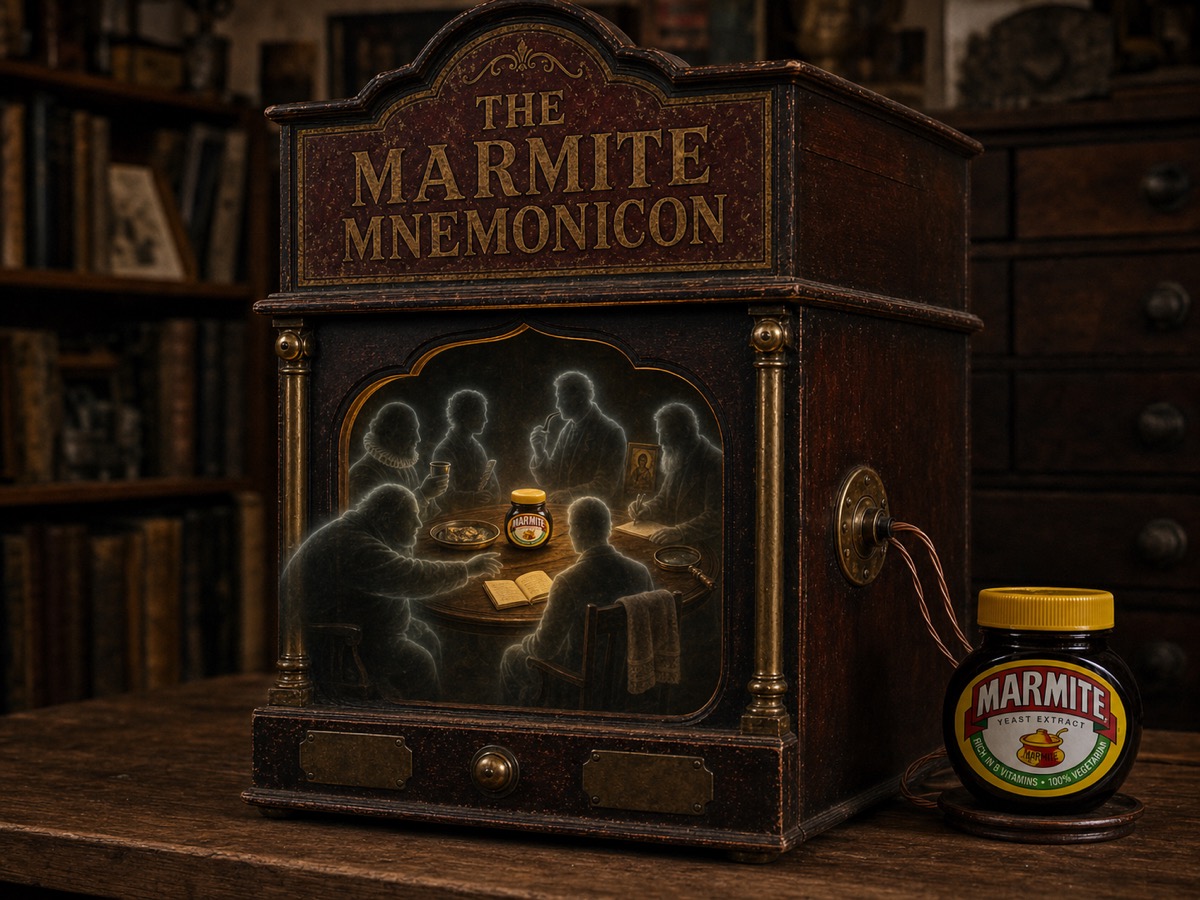
Six ghosts at one jar. Churchill, Adams, Shakespeare, Keats, Dostoyevsky and Conan Doyle, with proper disagreement and the Dirk Gently x Ford Prefect crossover Shakespeare asked Adams to tell.
Could Vegemite buy Marmite?

Yes, technically. Probably not. Definitely not in any way Britain would survive. Bear with me. This is the most fun thought experiment in the whole McCormick story, and it ends in a place that says something useful about why the yeast-extract category is shaped the way it is.
Marmite at 125, with a new American owner in the room
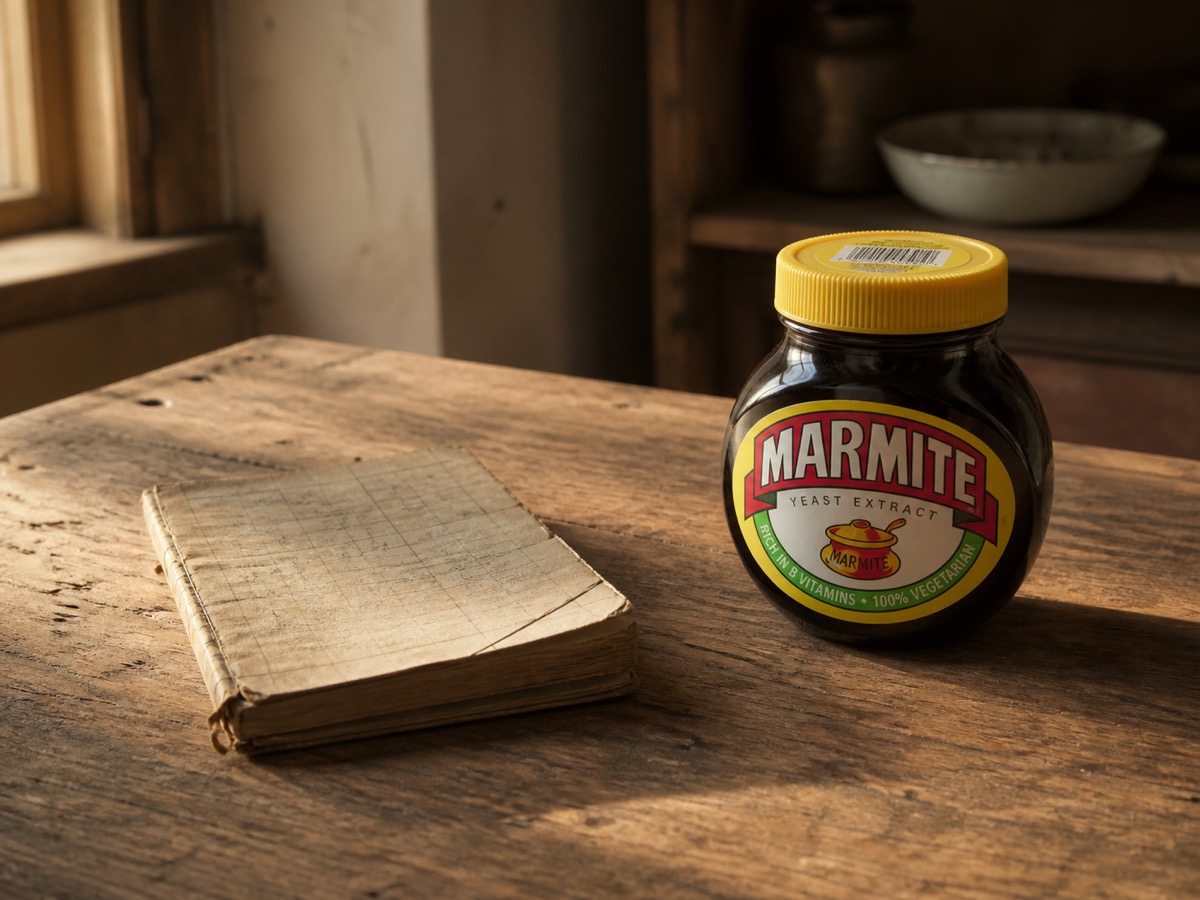
Marmite turns 125 in 2027, just as McCormick takes over. What a serious anniversary year should look like, and what we should probably expect instead.
Marmite Squeezy: the case for the bottle, and the small Marmite-jar argument it inherits

The Squeezy bottle solved three real problems with the jar: the knife, the contamination, and the wasted last third. When the bottle wins, when the jar wins, and why the recipe inside is subtly different.
Twelve celebrities go on the record about Marmite, and we have all the receipts

Twelve famous figures who have publicly committed to a side on Marmite, with their real quotes named and sourced. Six lovers (Florence Pugh, Sir Paul McCartney, Nigella Lawson, Nadiya Hussain, Hailey Bieber, Gordon Ramsay), six haters (Madonna, John Cena, Adele, Anthony Albanese, Hugh Jackman, Piers Morgan), and two more who use the word as a metaphor for their own work.
Page 1 of 24
Next »