
Mar-meet, not mar-might
The pronunciation argument has been running for at least a hundred years. “Mar-meet” is the original French, and is, technically, correct. “Mar-might” is the British naturalisation, and is what almost everyone in Britain actually says. Both are now acceptable. The brand itself uses “mar-might” in its modern advertising.
But the original is French. The word “marmite” in French means a large, lidded earthenware or metal cooking pot, the kind you would simmer a stew in for hours. Pronounced, originally, “mar-meet”.
Why the name
Two reasons, both about marketing.
First, the original Marmite Food Company in 1902 wanted to associate their new yeast-extract spread with the more sophisticated end of European cuisine. French cooking was the gold standard at the turn of the century. A French name, on a British food product made from leftover brewery yeast, lent a small piece of borrowed prestige. The same trick that put “Heinz” on tomato ketchup and “Schweppes” on tonic water.
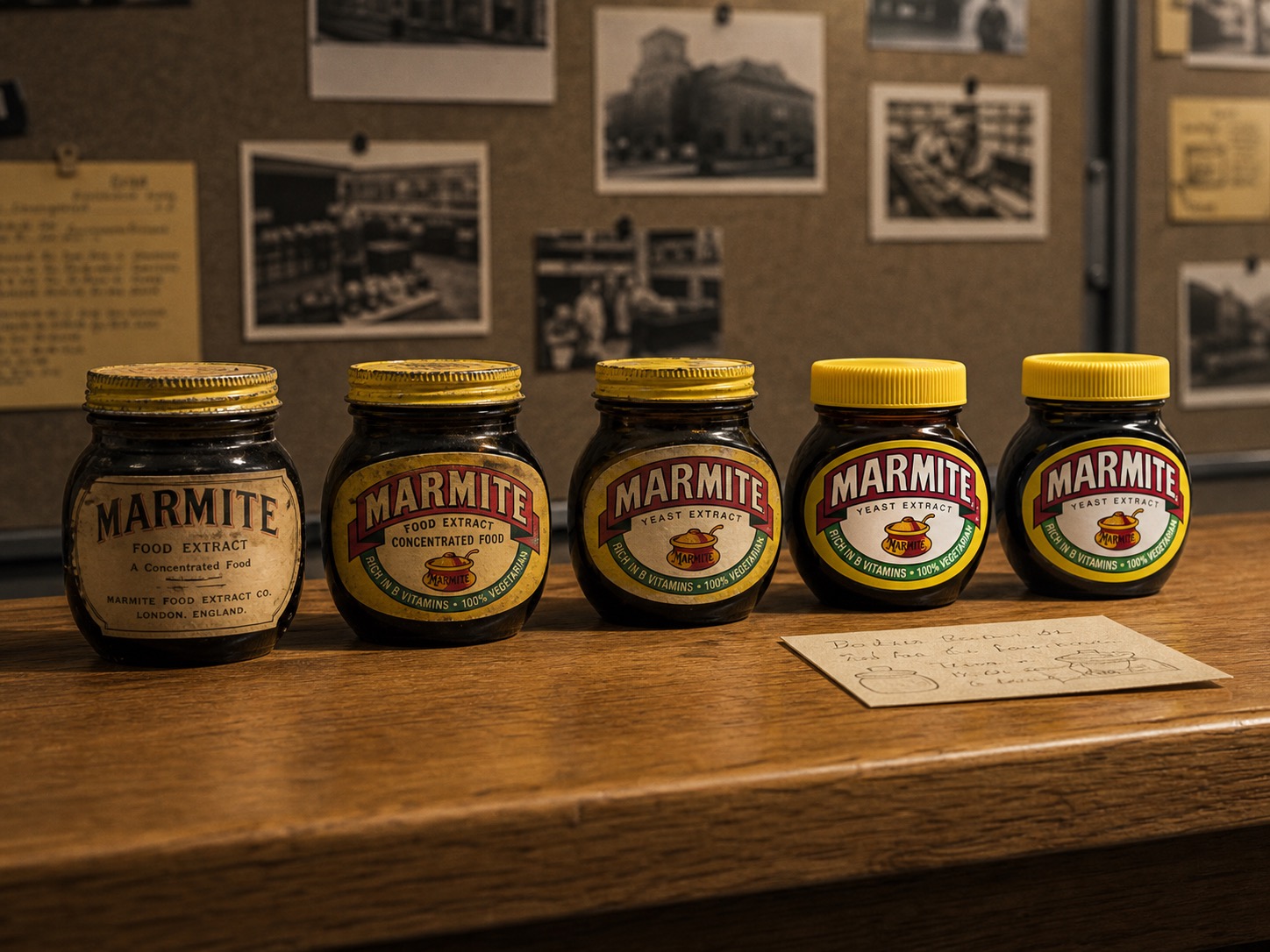
Second, the spread was originally sold in actual marmite pots. Small, lidded, earthenware. They held a few ounces of Marmite each. You bought them at the grocer, took them home, scraped out the Marmite, then either returned the pot for a refund or kept it for the kitchen. Some of these original pots still turn up at car-boot sales and are properly collectible.
The jar arrives
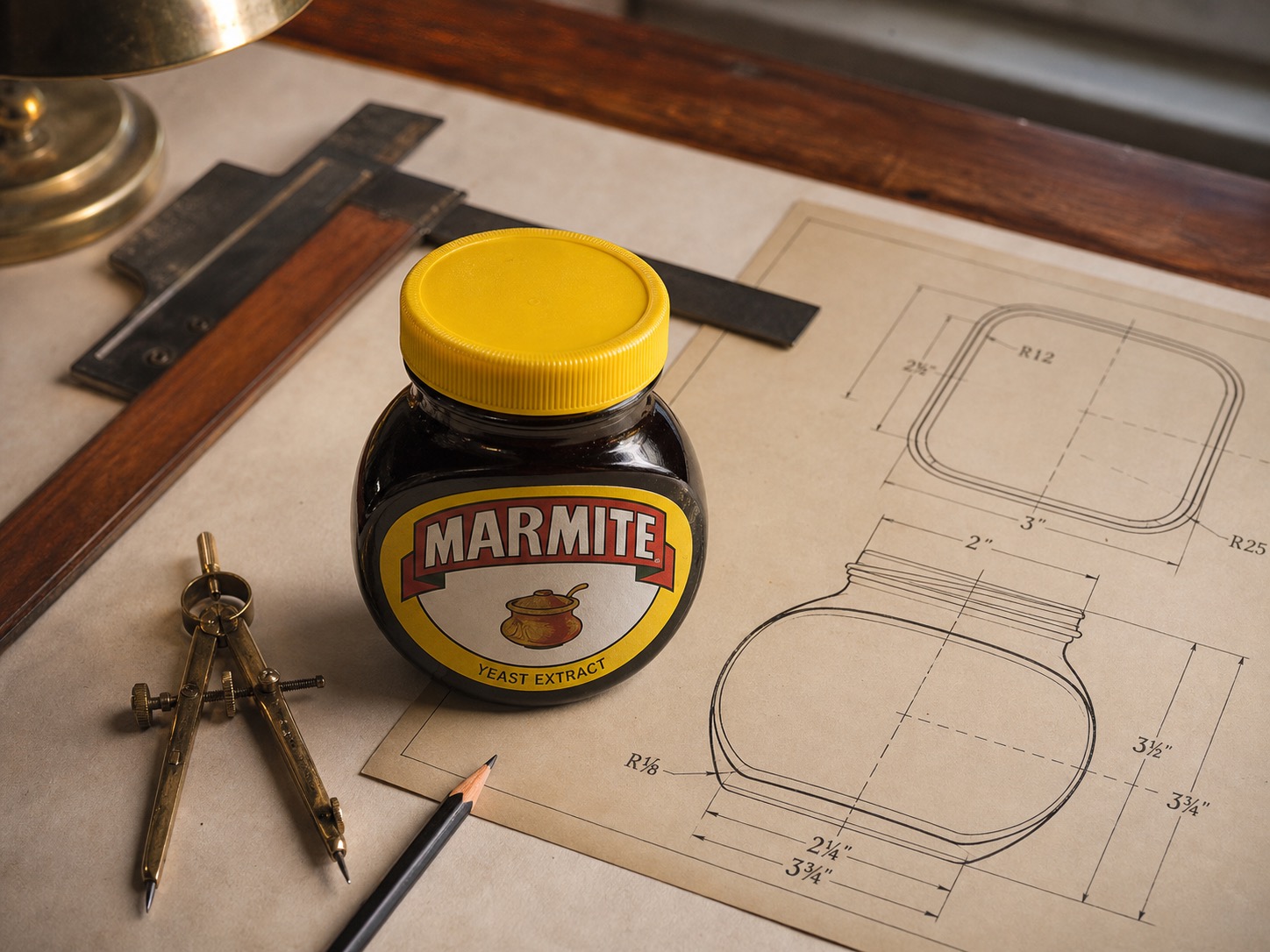
The earthenware pots were phased out in the 1920s in favour of the bulbous glass jars we know today. The reasons were sensible: glass was cheaper to produce at scale, easier to fill on a production line, easier to ship without breaking, and the consumer could see how much Marmite was left before buying a new one. None of which was true of the opaque earthenware pot.
The picture of a marmite pot was kept on the label. It is still there. If you look at any modern Marmite jar (classic 250g, yellow label, black lid), the pot is the design element under the brand name, slightly stylised but recognisably a covered earthenware vessel. Most people who buy Marmite have looked at that picture thousands of times and never registered what it was.
Now you have. You will not be able to un-see it.
A small note on French Marmite
There is no French Marmite. The product is British, the name is borrowed. France itself has never had a yeast-extract spread in the Marmite style (although various French savoury condiments like Maggi liquide do a related job). The French word that gave Marmite its name is itself still in use in French for the cooking pot, and you can buy a marmite-the-cookware at most French cookware shops. You can also buy Marmite-the-spread in French supermarkets, although it is on the expat-foods shelf, not in the mainstream condiments aisle.
The continental heritage is, in other words, mostly etymological. The product is Burton-on-Trent through and through.
Source: Marmite Museum; OED on the etymology; Wikipedia on the company history.