
The closest analogue we have
If you want to know what happens to a British heritage food brand under McCormick ownership, you do not have to speculate. There is already a forty-two-year working example sitting on every supermarket spice shelf in Britain. It is called Schwartz, and you have probably bought it this week without realising it is owned by the same American company that has just bought Marmite.
This piece is the case study. Schwartz is not Marmite (it is herbs and spices, not yeast extract), but the structural parallels are unusually clean: a British market-leading consumer food brand, manufactured at a UK facility, with strong national heritage in its marketing, bought by McCormick & Company of Hunt Valley, Maryland. The Marmite-McCormick comparison the British press should be making is Schwartz, not Cadbury.
A quick history
Schwartz was founded in 1889 in Halifax, Nova Scotia, by William Schwartz, the son of a German immigrant. Despite the Canadian birthplace, by the mid-twentieth century Schwartz was operating as the British market-leading consumer spice brand through a joint venture (Schwartz Spices UK Ltd, 1967) with the British company Jenks Brothers Foods. By 1980 the British operation was wholly owned by R. Paterson & Sons Ltd, a long-established Glasgow tea and food group.
In 1984, McCormick acquired the Schwartz brand globally. The deal made McCormick the owner of the UK’s number one consumer spice brand alongside its existing North American operations. The UK arm became McCormick (UK) Ltd, trading as Schwartz.
That was forty-two years ago. The brand has been under McCormick continuously since.
What stayed the same
The name. Schwartz is still Schwartz on every label, every shelf, every supermarket sticker. McCormick has never tried to rebrand it.
The product. The Schwartz range is still herbs, spices, seasonings and recipe mixes. The recipes have evolved (new blends, new packaging formats), but the core product is unchanged from what McCormick acquired. The much-discussed Schwartz cinnamon controversy (the brand uses cassia rather than “true” Ceylon cinnamon, which baker-purists object to) is a recipe choice that predates the McCormick acquisition by decades and has not been changed since.
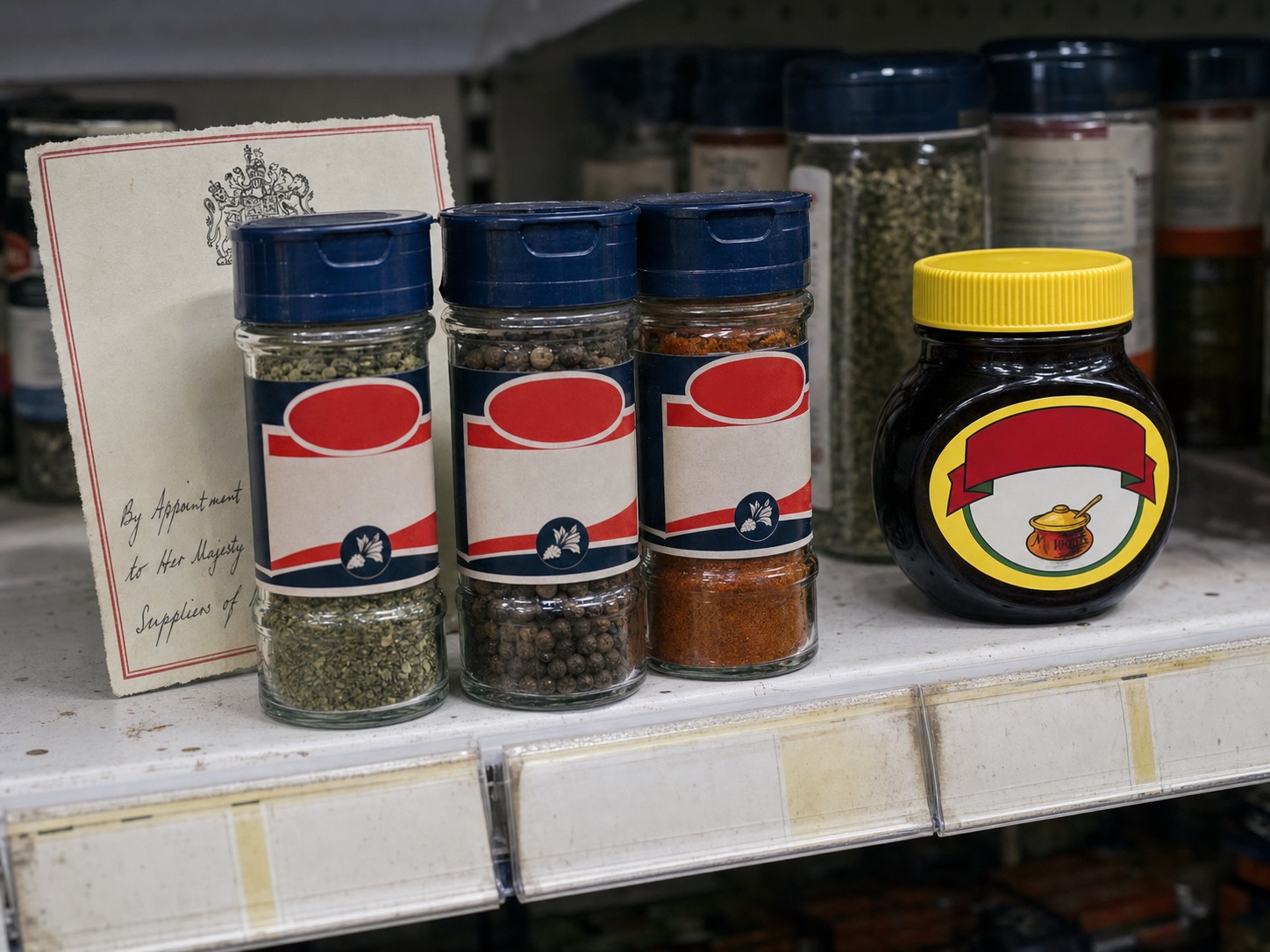
The British identity. Schwartz markets itself emphatically as British. The brand holds a Royal Warrant as supplier of herbs, spices and seasonings to the Royal Household, granted under the McCormick ownership. You cannot get more heritage-British than a Royal Warrant. McCormick has actively cultivated this status rather than diluted it.
The factory. Schwartz UK production has been based at the Haddenham Business Park in Buckinghamshire for decades, employing a permanent workforce. The 2009 plant received the “Sustainable Manufacturer of the Year” award after achieving a 48% rise in recycling and reductions in electricity (14%) and water (13%) consumption. The site has been continuously invested in under McCormick ownership.
What changed
This is the honest part. Some things did move.
The corporate identity shifted, quietly. Although the brand is still Schwartz, the corporate parent is McCormick UK Ltd. The legal entity that pays the staff, holds the manufacturing licence, and contracts with retailers is a McCormick subsidiary. This is invisible to the consumer.
The product range expanded. Schwartz under McCormick added significantly more recipe mixes, foodservice variants, and specialty lines than the pre-1984 Schwartz had. The brand grew rather than contracted. This is a McCormick pattern: the heritage brand is preserved and expanded into adjacent categories, not stripped back.
Foodservice (the trade) became a major channel. Schwartz for Chefs is now a significant restaurant-supply business operating alongside the consumer brand. This kind of B2B expansion is one of McCormick’s structural strengths and has been a net positive for the Schwartz operation.
The marketing budget went up, not down. Schwartz under McCormick has been a heavily-advertised consumer brand throughout the last forty-two years. The brand spends more on advertising as a McCormick subsidiary than it likely would have under R. Paterson & Sons.
What did not happen
The list of feared things that did not happen is also worth itemising, because British press coverage of the Marmite deal has been heavy on these worries.
- Schwartz UK production has not been closed and shifted to a European or American plant.
- Schwartz recipes have not been changed to suit American palates.
- The Schwartz brand has not been replaced by the McCormick brand in the UK market.
- The Royal Warrant has been maintained, not abandoned.
- Schwartz has not been used as a vehicle for “Americanising” British home cooking.
In forty-two years.
What the Schwartz experience tells us about Marmite
The most direct lessons:
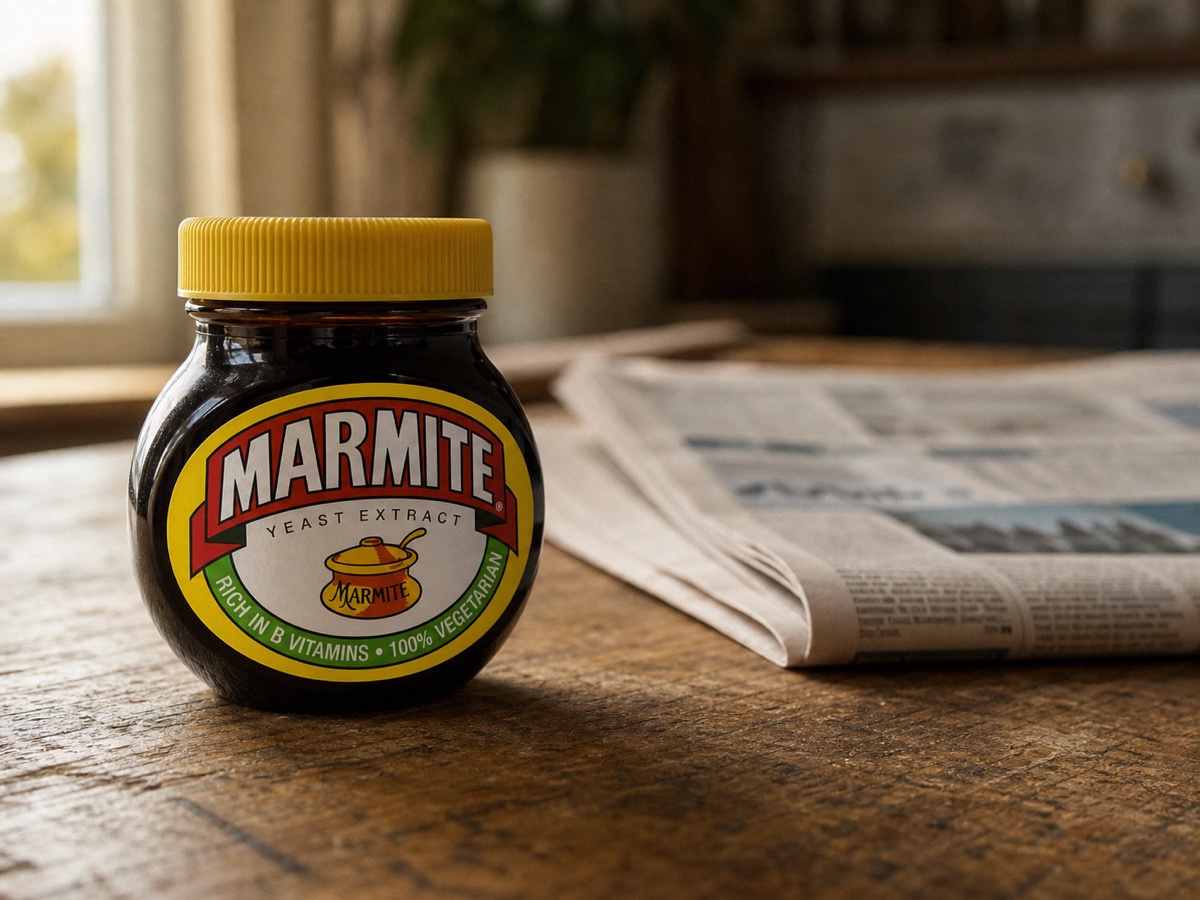
1. The brand will still be called Marmite, on the same jar, with the same label. McCormick has zero history of rebranding heritage acquisitions. The yellow-and-oxblood Marmite jar at 125 years old is exactly the kind of brand equity McCormick is good at preserving.
2. The recipe will not be changed. McCormick’s own corporate culture treats heritage recipes as the asset they are. The risk of an “American Marmite” with different spices or a sweeter profile is, judging by Schwartz, very low.
3. Burton-on-Trent will likely stay open for the long term. Schwartz’s UK production is still in Haddenham forty-two years on. Ducros production is still in the Vaucluse twenty-six years on. The “manufacturing centralisation” risk is real but it tends to come ten to twenty years post-acquisition, and the Burton site is unusually defensible because it sits next to its raw material supply (the Burton breweries) in a way that no other location could match.
4. A Royal Warrant for Marmite is plausible. Schwartz holds one. If McCormick is good at heritage branding (and on the evidence it is), pushing for a Royal Warrant for Marmite in time for the 2027 anniversary would be a sensible move. Marmite has the heritage. It has the cultural weight. It has the national-treasure profile. A Royal Warrant would be both excellent marketing and a strong signal of McCormick’s seriousness about the UK heritage of the brand.
5. The small UK Marmite back-office may shift. The Schwartz operation has had its IT, finance and admin functions consolidated into broader McCormick European structures over time. The Marmite UK marketing team should expect the same. This is the offshoring risk, and it is real, but it is small in headcount terms and invisible to the consumer.
What McCormick should learn from its own Schwartz playbook
There is a question of whether McCormick, in 2026, applies the Schwartz playbook to Marmite, or whether the McCormick of 2026 is a different beast from the McCormick of 1984.
The signs are encouraging. Brendan Foley, McCormick’s Chairman and CEO, used the announcement language of “long-term manufacturing agreements”, which is consistent with the Schwartz pattern. McCormick has explicitly committed to maintaining an International Headquarters in the Netherlands, which suggests it sees European heritage as a competitive advantage, not a cost to optimise away.
If McCormick repeats the Schwartz playbook with Marmite, the outcome is genuinely good for the brand, the Burton workforce, and the British consumer. Bigger marketing budget, preserved recipe, eventual Royal Warrant. We could do much worse.
If McCormick deviates and treats Marmite as the Aeroplane Jelly precedent instead (heritage marketing preserved, production quietly relocated after a decade), the outcome is materially worse for Burton specifically but still survivable for the brand.
The Schwartz precedent is the one to root for. It is also the most likely one.
Sources: McCormick (UK) Ltd Royal Warrant Holders Association entry; Schwartz UK about-us page; Food Manufacture (2011) on Schwartz UK production; McCormick & Company corporate history; UK Companies House records for McCormick UK Ltd; press coverage of the Schwartz Haddenham facility’s 2009 sustainability award.