

A trend ten years in the making, suddenly noticed
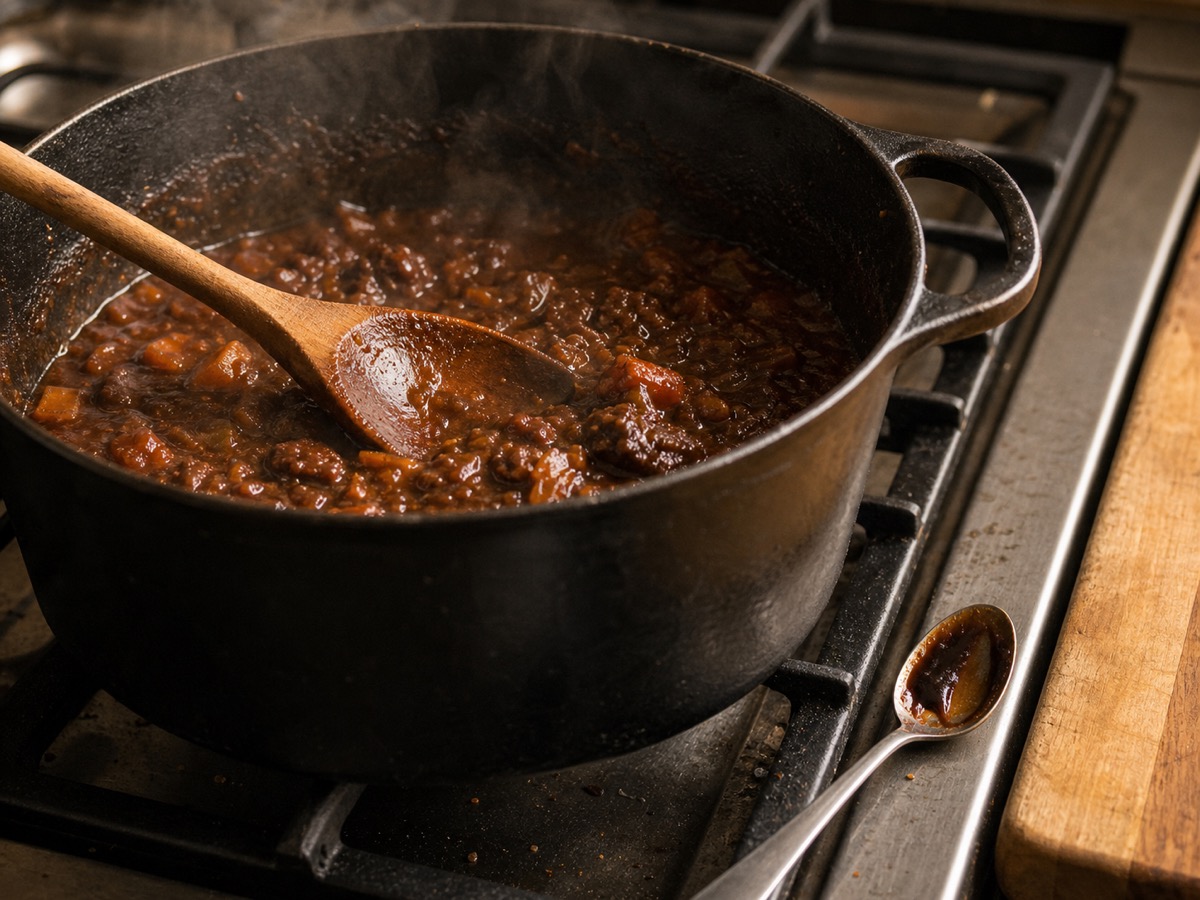
The hashtag #UmamiBomb has just passed thirty million views on TikTok, and roughly half of those views are people putting Marmite into things you would not, on first instinct, put Marmite into. Beef ragu. Mushroom risotto. Chocolate brownies. Roast potatoes. Vegetable stock. The teaspoon of Marmite is the trick, and a small army of food creators has, in the past three months, simultaneously discovered it.
Anyway. The trick is genuine, the results are good, and most of the videos are short and useful enough that you can watch one and immediately know whether the technique will help your weeknight cooking. As internet food trends go, this is one of the better ones.
Nigella got there first
Nigella Lawson has been quietly putting Marmite in things since at least 2010. Her Marmite spaghetti, in Kitchen (2010), is essentially the umami-bomb principle applied to one pan: butter, pasta water, parmesan, and a great deal more Marmite than a sane person would think to add. The recipe has been doing the rounds online for over a decade. It is the unacknowledged grandparent of the entire current trend.
Yotam Ottolenghi has been doing the same in his stews. Tom Kerridge, in his pub-cooking books. A small chorus of professional chefs have been mentioning Marmite as a “secret weapon” in interviews for years. None of this is new. What is new is that TikTok has, in 2026, collectively decided to notice.
This is not a complaint. Trends often work this way. A technique sits quietly in cookbooks for a decade, then one creator films it with the right lighting and the right pitch, and suddenly the technique becomes a thing.
Why it actually works
The food science is straightforward. Marmite is concentrated yeast extract, which means it is concentrated glutamates. Glutamates are the building block of umami, the savoury “fifth taste” that monosodium glutamate isolates and that food cultures have been chasing for centuries through fermented sauces, aged cheeses, and dried mushrooms.
A teaspoon of Marmite in a Bolognese gives you, more or less, the same effect as half an hour of additional simmering with bones and reduction. It is not a substitute for proper braising. But it is a useful shortcut on a Tuesday night when proper braising is not happening.
The technique works best in dishes that already have a savoury base and where the Marmite can dissolve completely. Stews, pasta sauces, gravies, stocks, slow-cooker recipes. It works less well in anything where the Marmite cannot dissolve and remains a pocket of flavour, which is why the chocolate brownie version is divisive.
What the trend leaves out
Two things, mostly.
First, dose. The TikTok videos are not great at dose calibration. A teaspoon of Marmite in a one-pot Bolognese for four people is about right. The same teaspoon in a single-serving pasta is too much. The trend videos rarely mention this, and the comments are full of people who put too much Marmite into too little food and concluded that the technique was a trick.
Second, what it does not do. Marmite cannot fix a thin, watery dish. It cannot replace meat in a beef stew. It adds depth to flavours that are already there, but it does not invent flavours that are not. The umami-bomb framing implies a kind of magic-button effect, and the magic button is mostly real but it has limits.
What this means for the brand
The trend is, by accident, the perfect lead-in to the “Dishes of Love and Hate” campaign that adam&eveDDB launched in April. The campaign’s strategic premise is that Marmite should be repositioned as a cooking ingredient rather than a toast spread. The TikTok crowd has, for free, done a significant chunk of the audience development work in advance.
The risk, as ever, is that the trend burns out before the brand can capitalise on it. TikTok cycles fast. Six months from now, the hashtag may be cold, the creators may have moved on, and Marmite will be left holding a campaign for an audience that has already turned its attention to something else.
This is why the brand has been careful to commission proper chefs (Nigella, Monica Galetti, Sat Bains) for the campaign rather than chasing TikTok creators. The chef endorsements have a longer shelf life. The trend is a useful tailwind, not a foundation.